Mechanical Rejuvenation: A Mechanobiological Framework Linking Massage Therapy to Cellular Senescence and Longevity
The first systematic position paper formally proposing massage therapy as a mechanobiological intervention within geroscience.
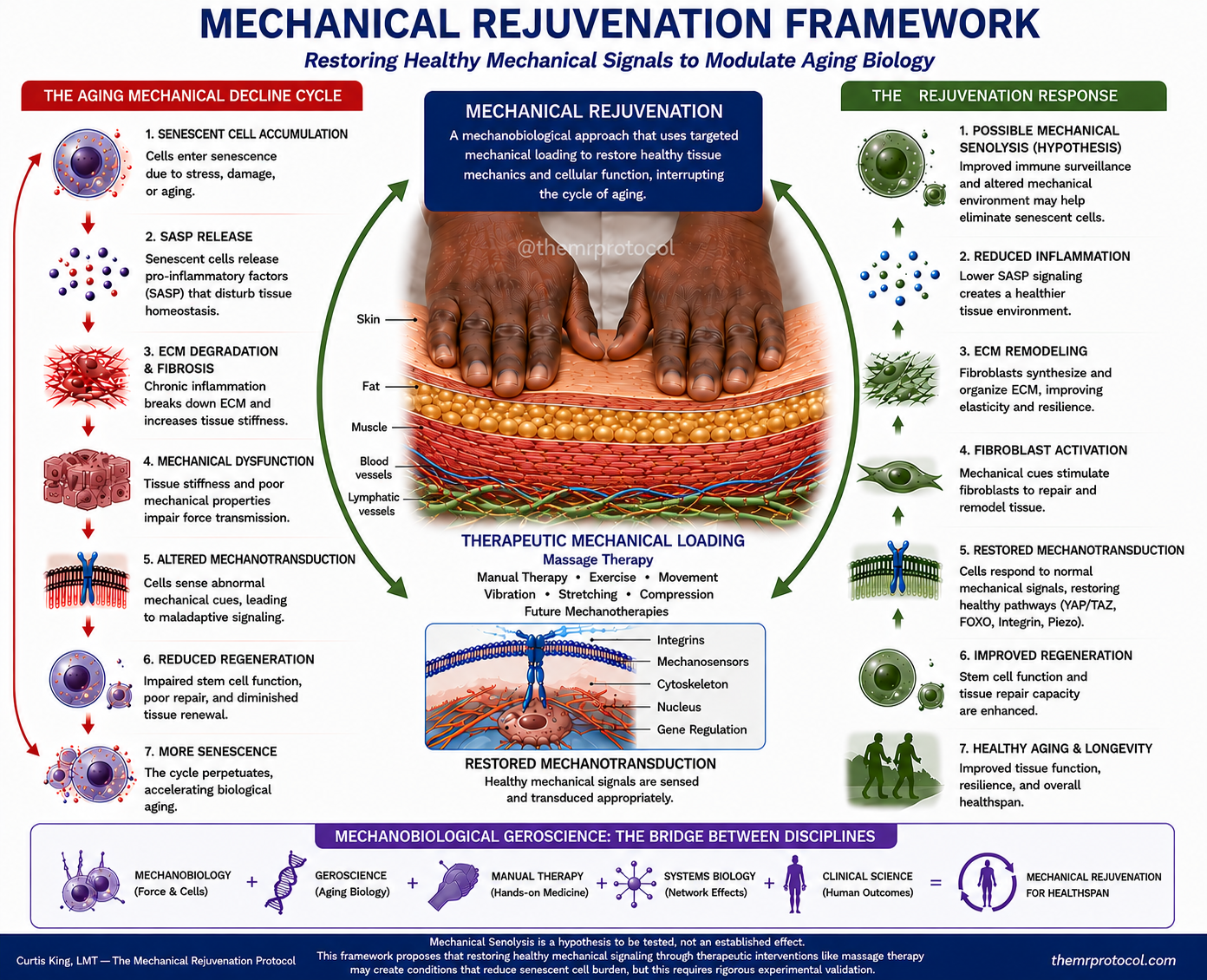
This paper proposes the hypothesis that massage therapy may influence biological aging by engaging multiple pathways central to cellular senescence, including mechanotransduction, extracellular matrix remodeling, inflammatory regulation, lymphatic clearance, and neuroendocrine signaling. While no studies have yet demonstrated direct senolytic effects of massage through measurement of senescent cell burden, the convergence of mechanistic and clinical evidence suggests that manual therapy deserves investigation as a mechanobiological intervention within geroscience. We introduce Mechanical Rejuvenation as an umbrella concept describing the restoration of youthful tissue behavior through targeted mechanical stimulation. Within this framework, we propose Mechanical Senolysis as one specific hypothesis — that because senescent cells possess distinct mechanical phenotypes, targeted manual therapy may ultimately prove capable of facilitating their selective elimination or immune-mediated clearance. We further propose the emergence of Mechanobiological Geroscience as a formal interdisciplinary field bridging manual therapy and the science of biological aging.
How Phases 1 and 4 Address the Aging Tissue Microenvironment
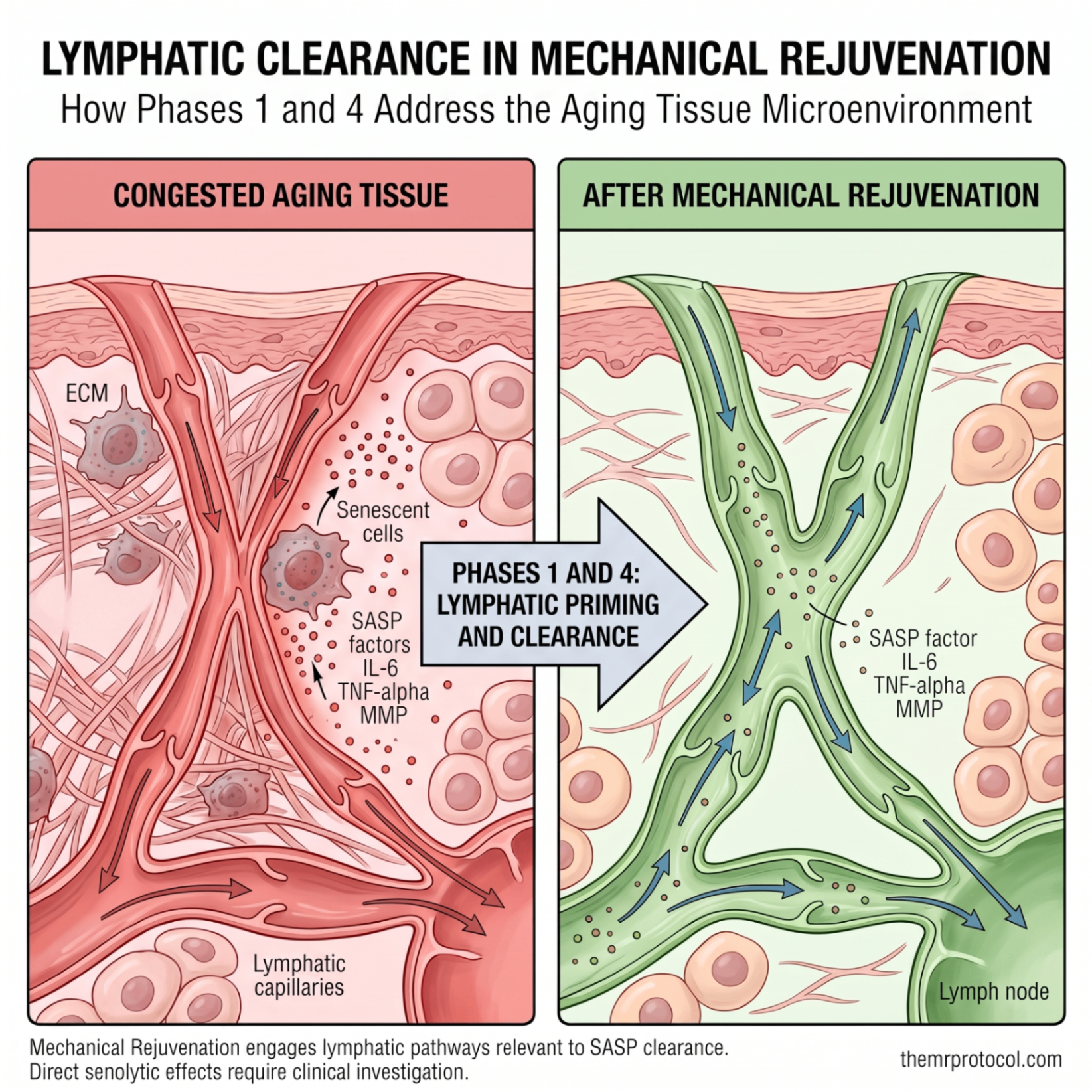
Mechanical Rejuvenation engages lymphatic pathways relevant to SASP clearance. Direct senolytic effects require clinical investigation.
Download the Full Paper
Available for peer review and research collaboration. Contact themrprotocol2026@gmail.com
Curtis King, LMT
- Licensed Massage Therapist — 18 years clinical experience
- Certificate in Stretch and Flexibility Coaching
- Independent researcher in mechanobiology and geroscience
- Founder, The Mechanical Rejuvenation Protocol — Central Florida
If you are a researcher in geroscience, mechanobiology, or clinical aging medicine and find the framework compelling, I am actively seeking collaborators for the studies proposed in this paper.